
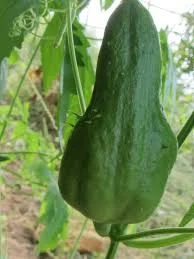
Achocha: A Stuff-able Cucumber
Cyclanthera pedata (L.) Schrader
![[10]](https://images.squarespace-cdn.com/content/v1/59bae60f1f318d07a99856a4/1515094841164-9H8V0LUB4CDZZTILO2WI/Achocha.jpg)
[10]
Cyclanthera pedata (L.) Schrader
Family — Cucurbitaceae
Family Characteristics — Members of this family have 5 united petals on their funnel shaped flowers that are segregated male and female. On male flowers the stamen (5 or 3) are often found twisted together, On female flowers, the ovary is positioned inferior or below the flower. Cucurbids are famous for either a sprawling or vining growth habit [6].
Colloquial Names —
Andean cucumber, Bolivian cucumber, cornucopia cucumber [7], lady’s slipper gourd, slipper gourd, stuffing cucumber (ENGLISH – USA);
caigua, achocha, concombre des Andes, concombre à farcir (FRENCH – France);
caigua, caihua, cetriolo delle Ande, cetriolo da ripieno (ITALIAN – Italy);
Andengurke, Anden-Schlangengurke, Inkagurke, Inka-Gurke (GERMAN – Germany / Austria / Switzerland);
アチョチャ (achocha), カイグア (kaigua) (JAPANESE – Japan);
pepino-do-Andes, pepino-de-encher, caigua (PORTUGUESE – Brazil);
tamila-de-cipó, tamilo-de-comer (PORTUGUESE – Portugal);
pepino de rellenar, pepino andino, caihua (SPANISH – Argentina);
achocha, achojcha, achoccha, caihua (SPANISH – Bolivia);
pepino de rellenar, pepino andino (SPANISH – Chile);
pepino de rellenar, pepino de meter, pepino andino (SPANISH – Colombia);
achocha, achojcha, achoccha, caihua (SPANISH – Ecuador);
caigua, caygua, caihua, achocha, achoccha, achogcha, achojcha, achogcha peruana (SPANISH – Peru);
achuqcha, achogcha, achoqcha, achojcha, kaywa (QUECHUA – Peru / Bolivia / Ecuador).
Binomial Etymology —
Binomial Pronunciation: —sick-LAN-thera pay-DOT-a
USDA Classification —
Taxonomic Synonyms— Anguria pedatisecta Nees & Mart, Anguria pedisecta Nees & Mart, Apodanthera pedisecta (Nees & Mart.) Cogn, Cyclanthera digitata Arn, Cyclanthera edulis Naudin ex Huber, and Momordica pedata L.
The achocha goes by many names, which tells us that it is somewhat important and has been around for “over ten years.” In fact, the oldest archeological evidence the fruit has been cultivated and consumed by First Peoples south of Lima, Peru, dated between 3794 and 1530 B.C.[8].
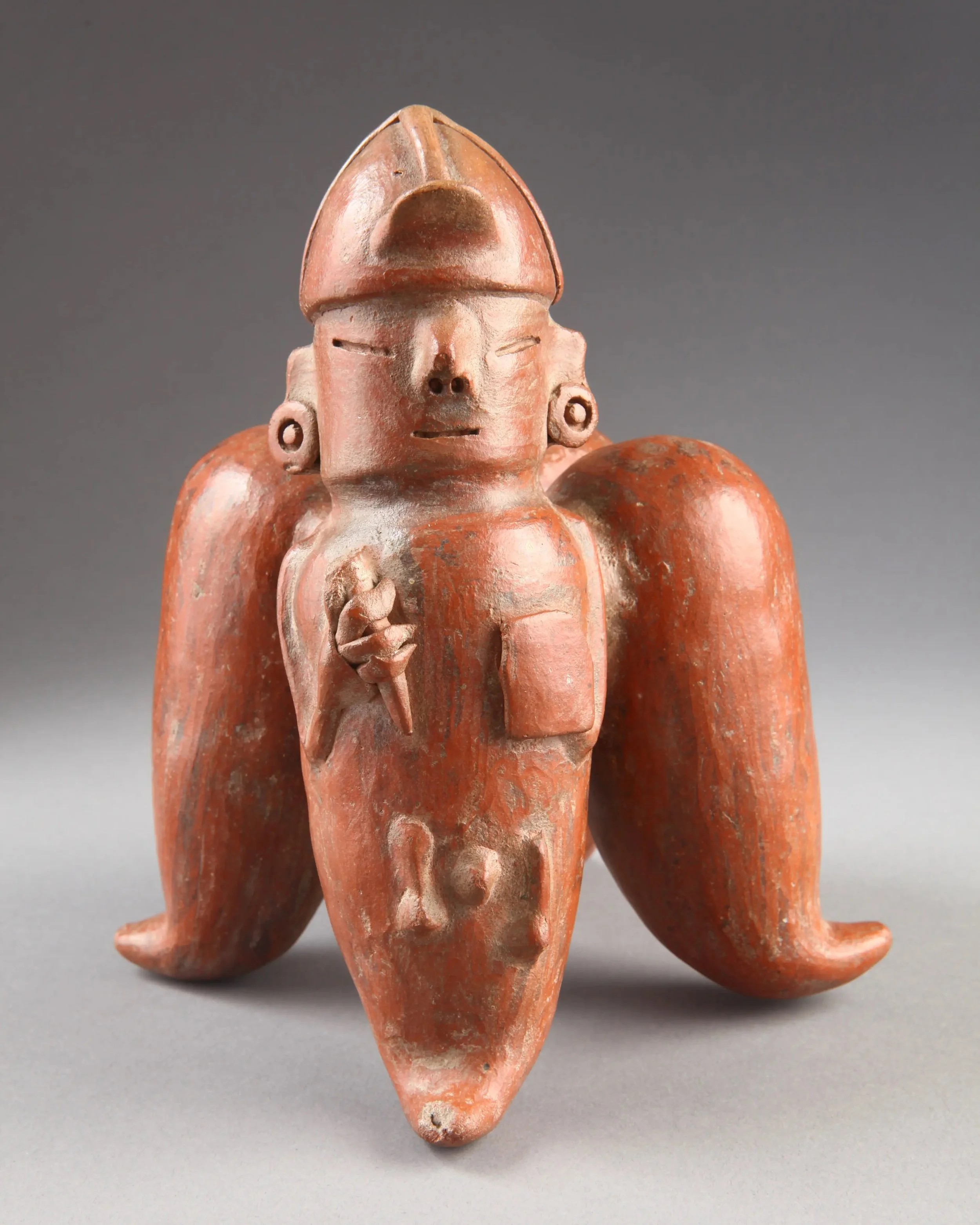
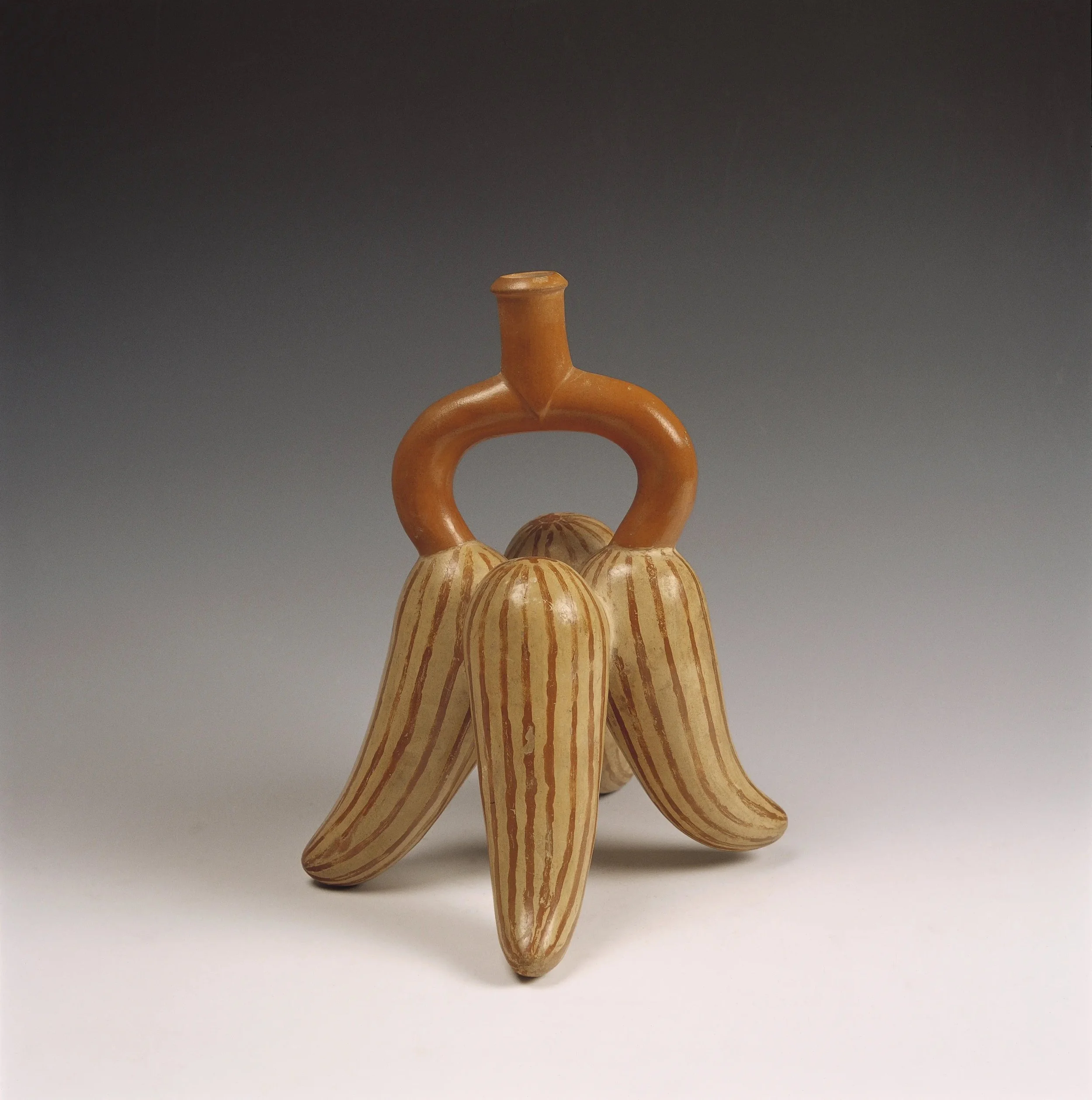
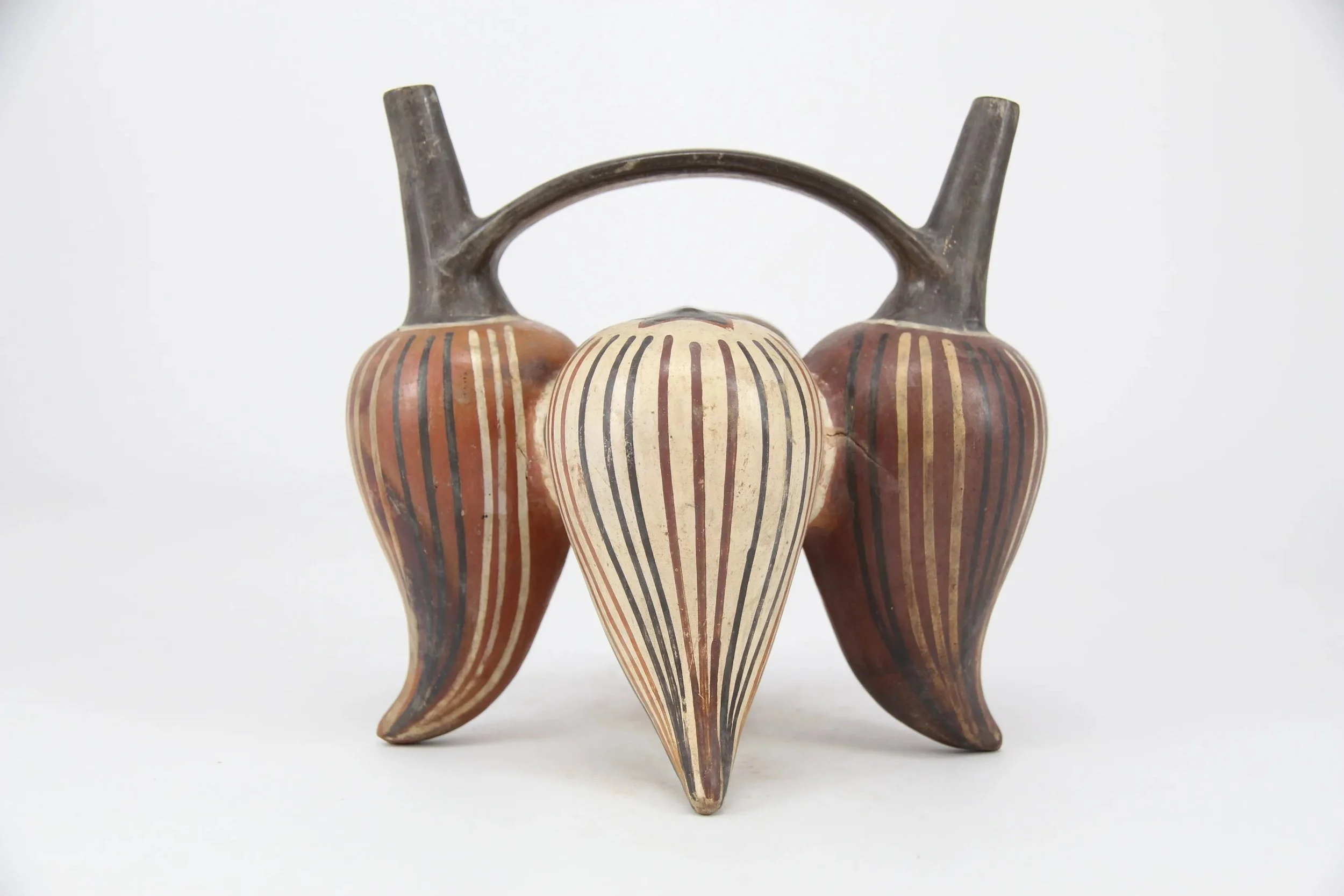
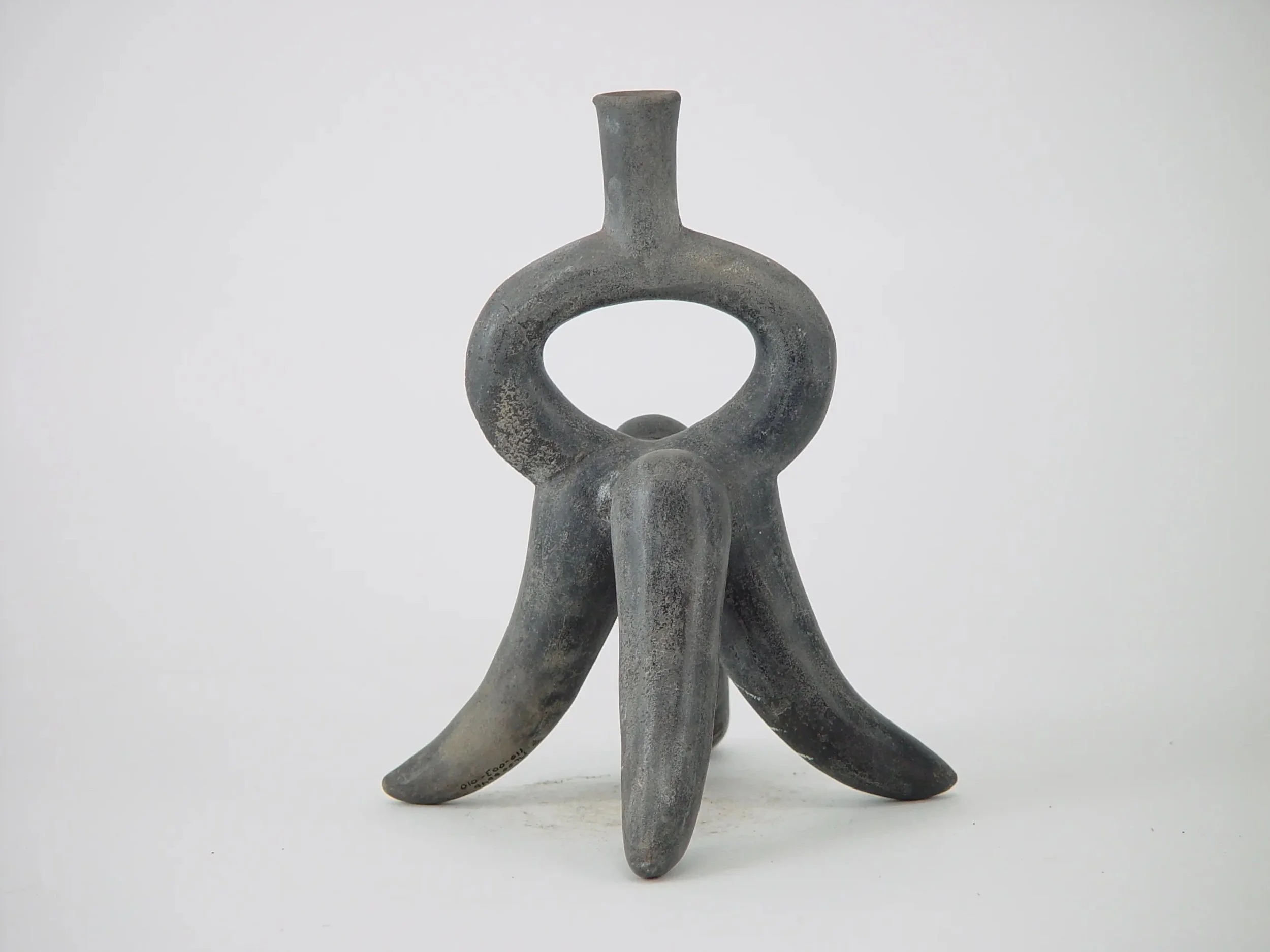
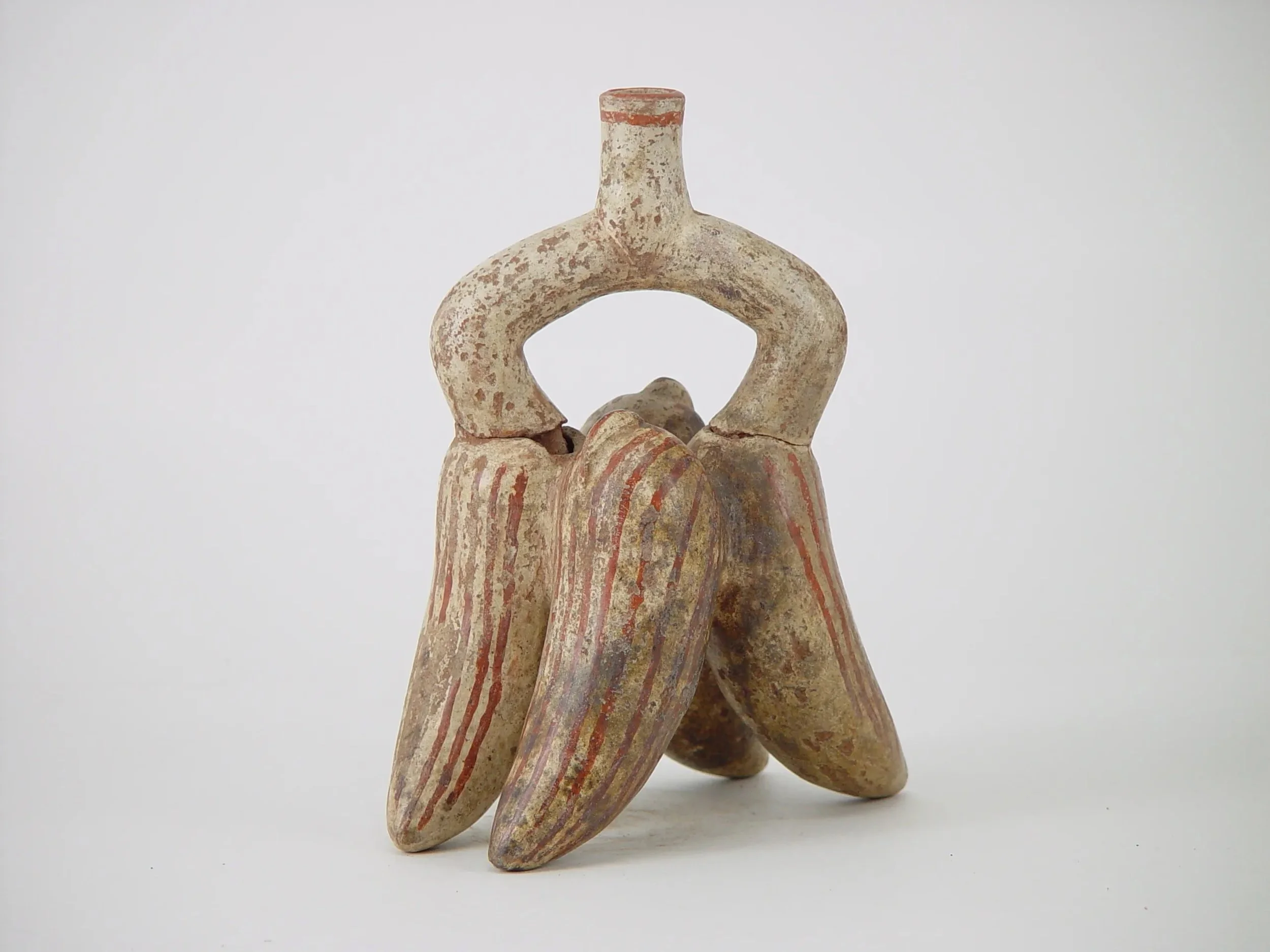
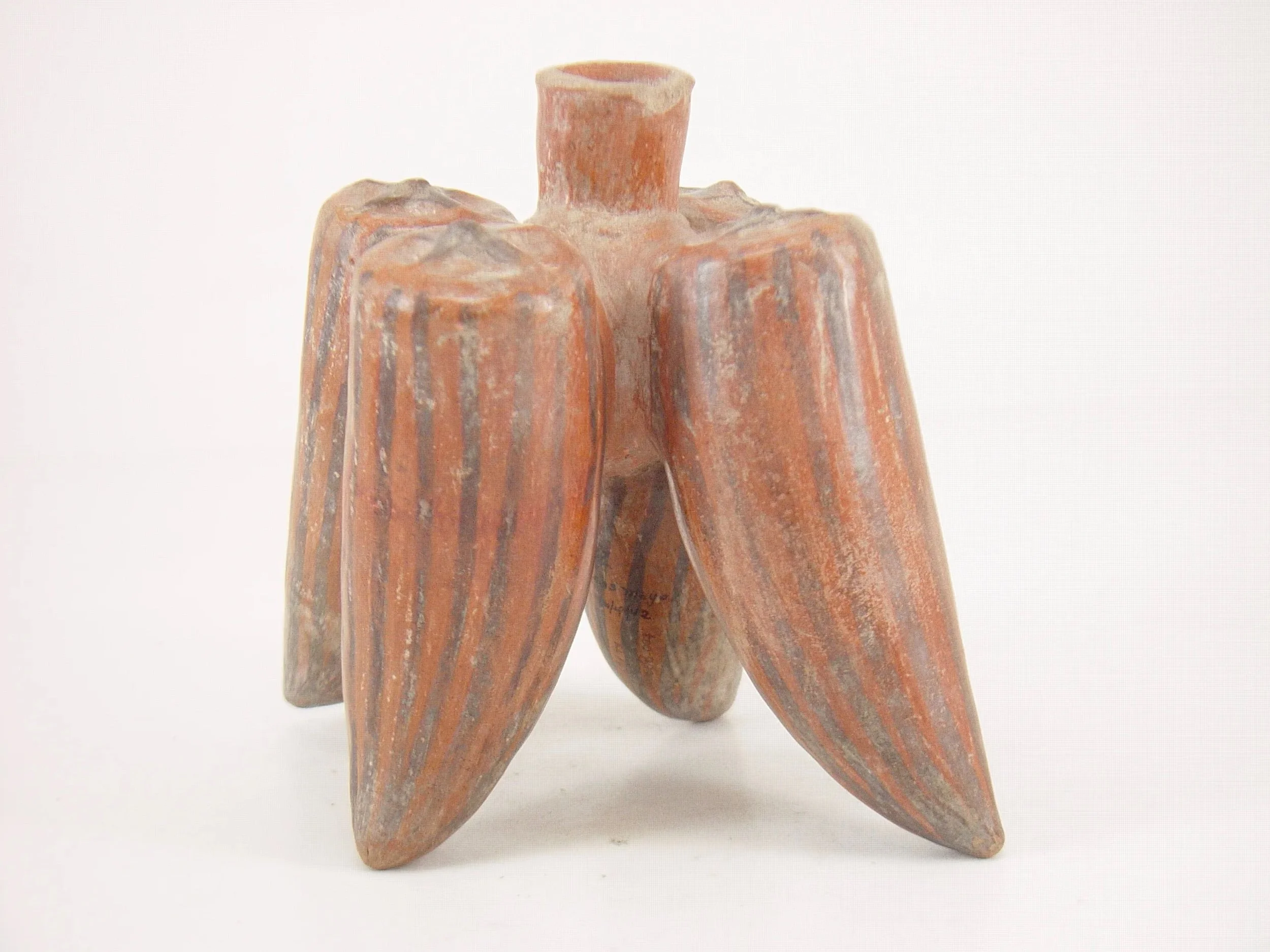
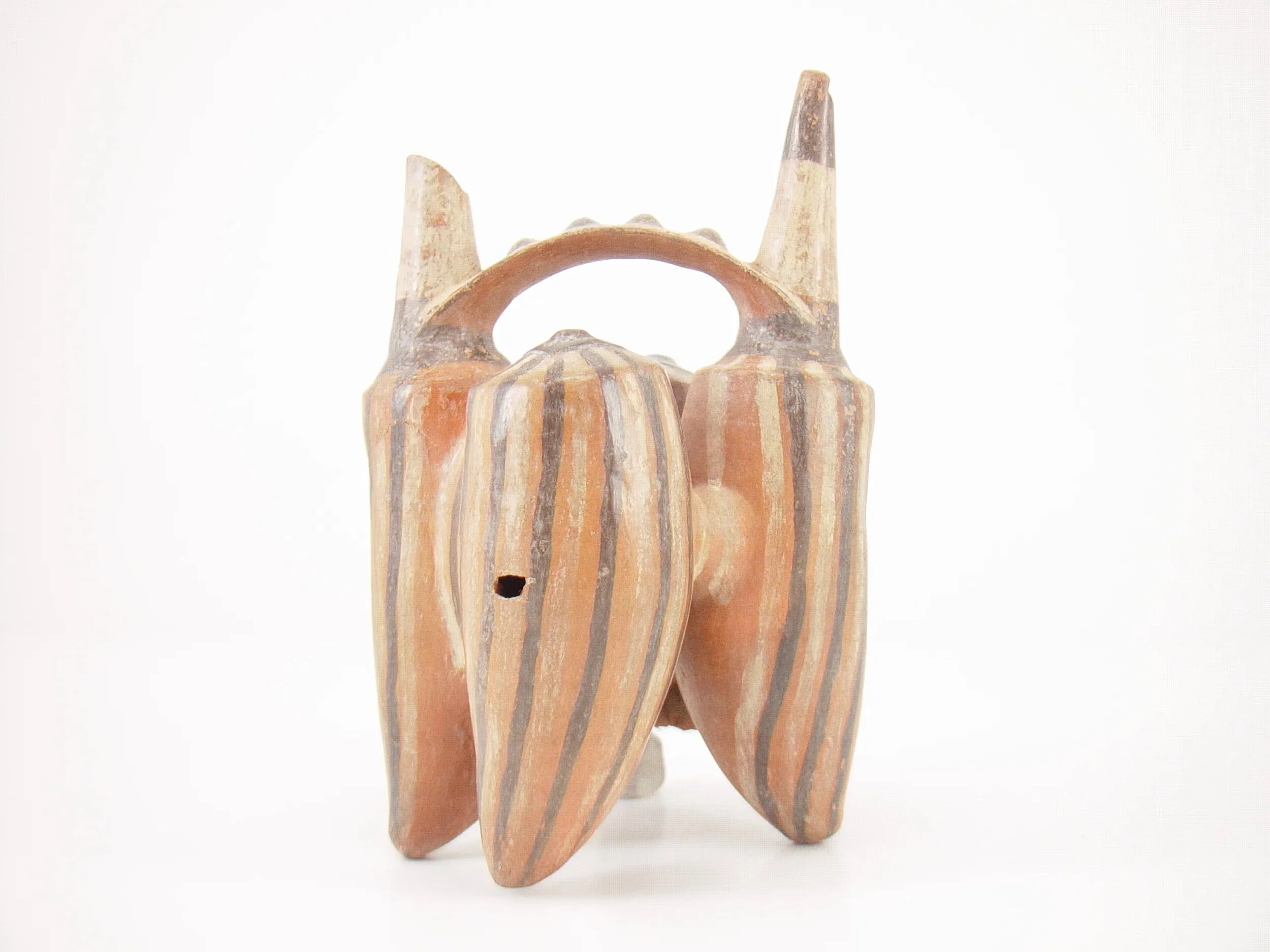
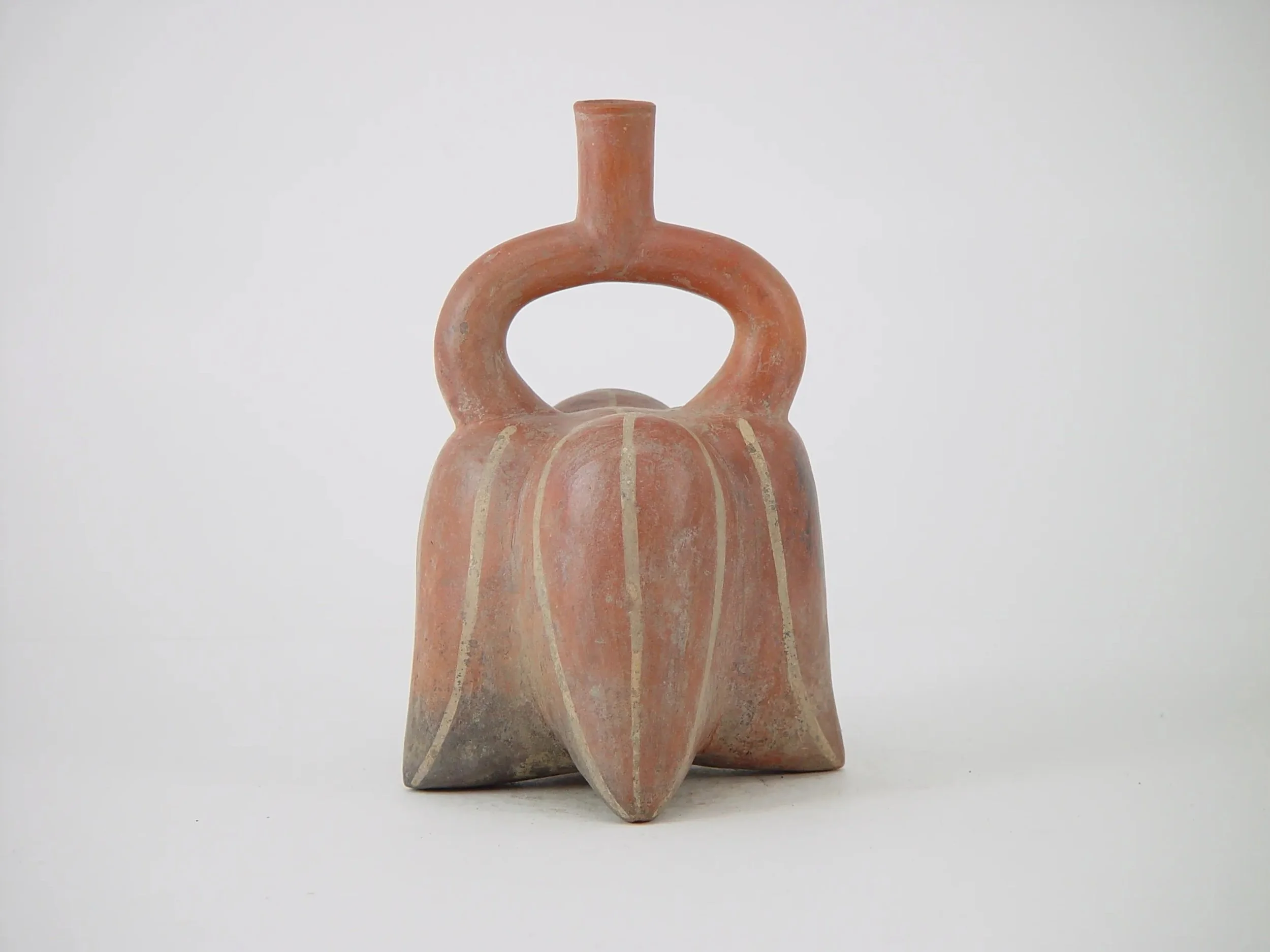
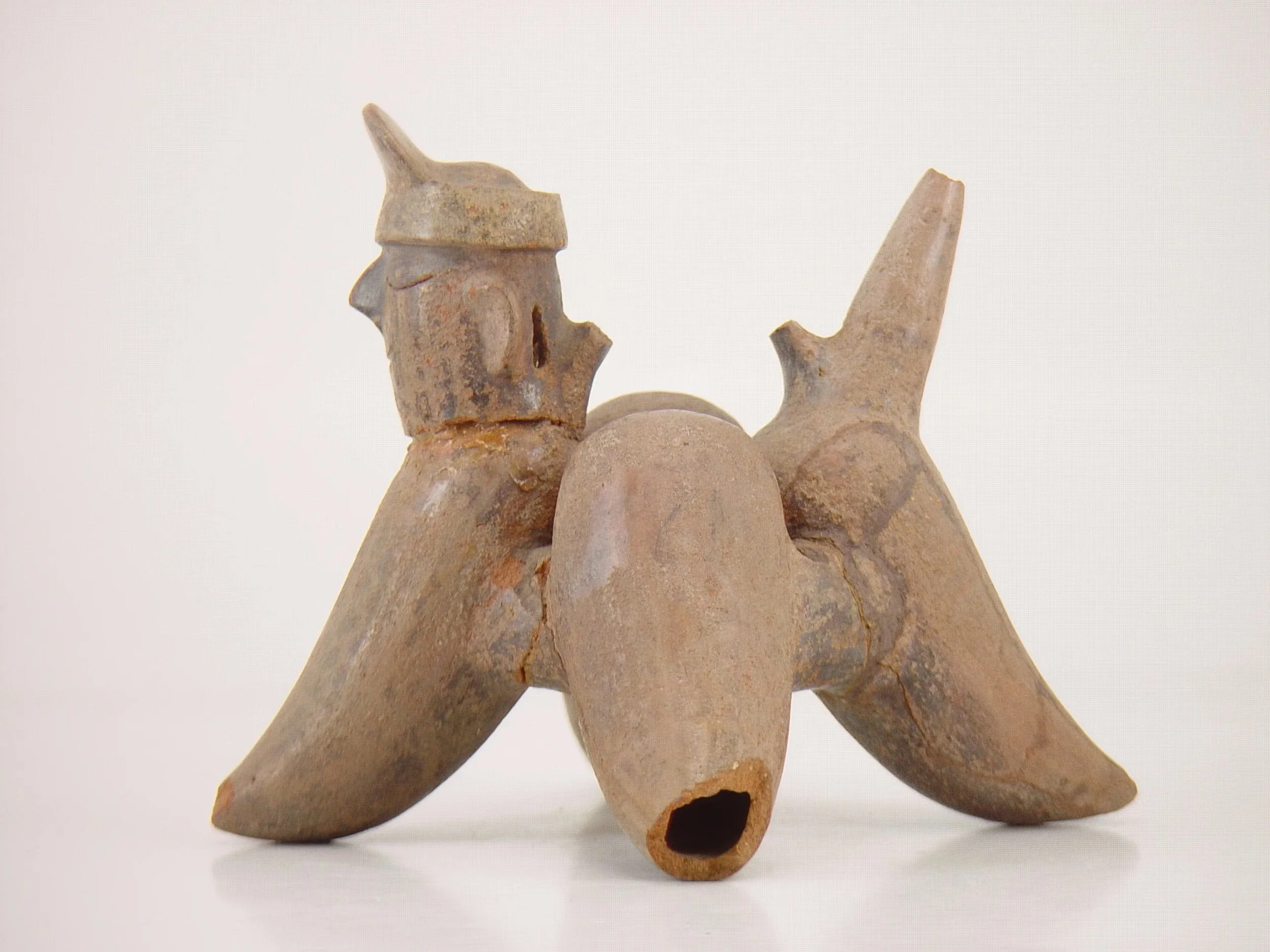
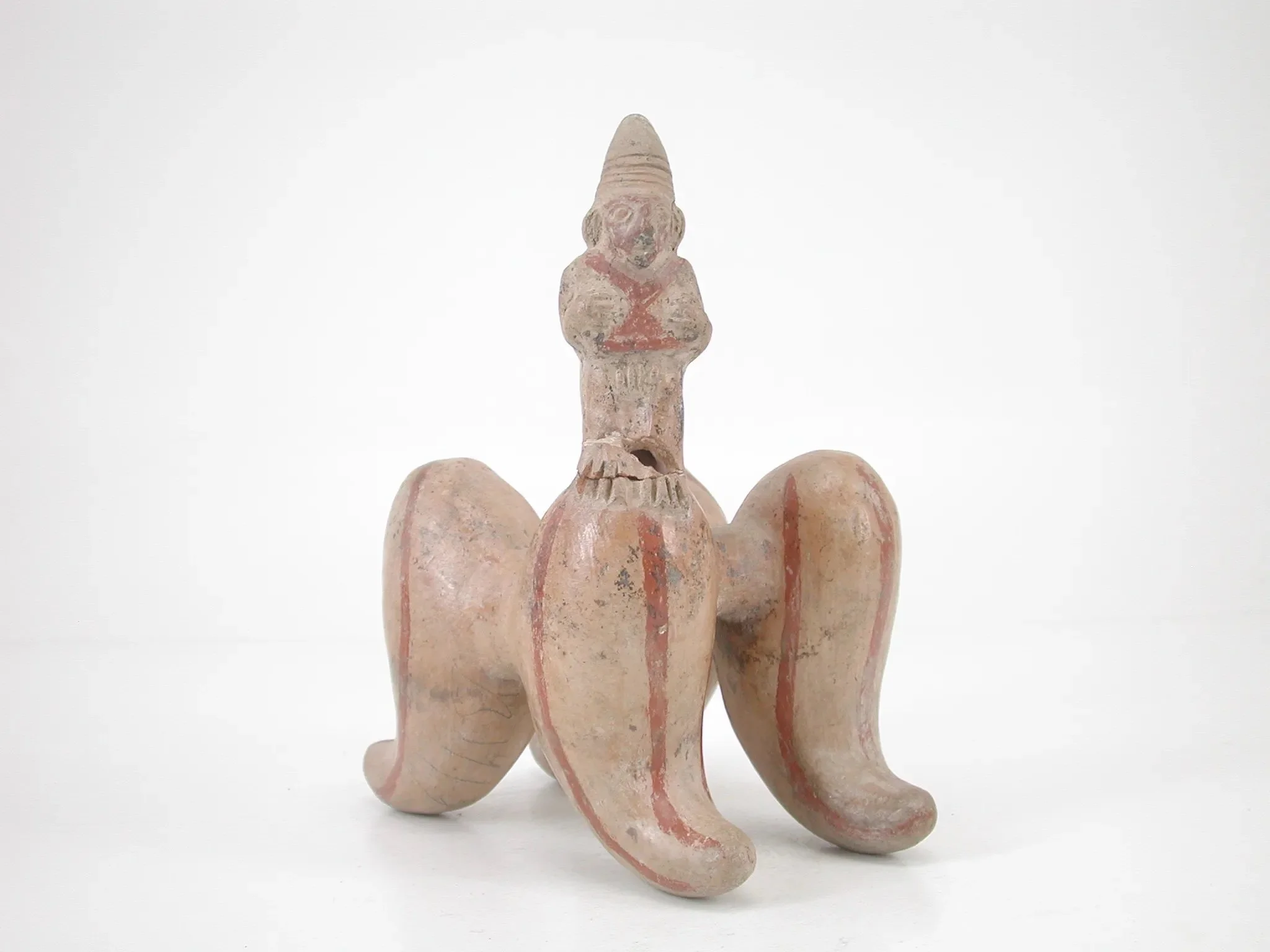
The achocha was so important, it was immortalized multiple times in phytomorphic vessels dating to over one to over two thousand years old. The below photographs are examples. These artifacts couldn’t have been created without a wealth of generational heirloom artistisanship. All vessels were made prior to European incursion in Peru and were photographed and made free to share by Museo Larco in Lima. Thank you, Museo Larco, for being world class stuarts of human heritage. https://coleccion.museolarco.org
Culinary Uses
“Stuffed Mangoes”
In the 19th century, USA, recipes for “stuffed mangoes” never called for the fruit we know today as the “mango.” Instead, egg-sized honeydews, peppers, green tomatoes, peaches, or hollowed out cucumbers were used. While the achocha was not known to 19th century North America, a cucurbit that was renowned for stuffing would have been used in this manner without a doubt. Whichever fruit you chose would be soaked in a salt brine overnight, drained, stuffed with a filling, sewn back together, and pickled in vinegar [4][5].
Ingredients:
Achocha fruits
4 cups finely chopped cabbage
1/2 cup seeded raisins
4 tablespoons sultanas
2 tablespoons white mustard seeds
2 tablespoon celery seeds
½ cup fresh grated horseradish
2 tablespoons nasturtium seeds (optional)
1 tablespoon thinly sliced ginger root
1 teaspoon turmeric
3 tablespoons olive oil
1½ tablespoons sugar
1/4 teaspoon grated nutmeg
1/2 cup sugar per Quart of Vinegar solution
Day One (Prepare Fruits):
Cut pods tops off and remove the seeds and white/pithy seed-holding structure. Soak Achocha fruits in a salt brine overnight.
Day One (Prepare Spiced Filing):
Chop-up two cups of cabbage (finely) and soak in a salt brine overnight.
Day Two (Prepare Spiced Filling):
Drain cabbage and add raisins, sultanas, white mustard seeds, celery seeds, horseradish, nasturtium seeds, ginger root, turmeric, olive oil, sugar and nutmeg.
Day Two (Prepare Achocha):
Drain and stuff Achocha with spiced filling, and sew or tie ends closed. Cover in scalding vinegar and sugar mixture (1/2 cup sugar to every quart of vinegar). You can either store these in the refrigerator or can them at this point.
Columbia:
An interesting idea originating from Columbia is to simply stuff the raw Achocha fruit with cottage cheese [3].
Ecuador:
Achocha predates European incursion into the Andean region. I was lucky to find an academic culinary survey of Andean canton of Chambo. The paper shared eleven recipes: stuffed achojcha with chicken, stuffed achojcha with beef, breaded achojcha, achojcha salad, sautéed achojcha (achojcha refrito), rice with achojcha, achojcha locro (Andean stew), achojcha cream soup, achojcha chili stew (ají de achojcha), beans with achojcha, and achojcha stuffed with spicy rice [1]. I have requested permission to translate a recipe, and am awaiting a response. In the meantime, you can access the recipes here: “USO Y APLICACIONES DE LA ACHOJCHA (cyclanthera pedata) EN LA TRADICIÓN CULINARIA EN EL CANTÓN CHAMBO”.
Peru:
Japan:
This recipe (link) in Japan that calls for making Achocha kimchi as a side dish. The blog recognizes the vegetable as unusual, but also states that it is grown Okinawa. [9]
Ethnobotany
Two drops of the fresh achocha juice were dropped into the eyes, twice a day, to treat painful eye infections among Andean-Amazonian frontier peoples of Peru [2].
Freaky Factoids
The tendrils of this plant will wrap around a support within four minutes [7]. The mature seed pod of this plant’s close relative, C. explodens, will explode as a seed dispersal mechanism… sending the seeds hurtling in all directions [8]. It has yet to be seen, but I believe the fruit of C. pedata contains the “parts” evolved for this action, but, sadly, the explosive nature of the plant has been bred out.
Growing Achocha [Section in Progress]
For your purposes, there are three things to know: 1) I am starting these seeds indoors in Zone 5b (Pueblo, CO), 2) this is my first time growing Achocha, and 3) I sourced these seeds from theplantattraction.com. I have not purchased seeds from this vendor in the past. I will amend this section to include instructions given what I learn from year to year.
I started the ten seeds in a starter tray with lights and a heat mat on 13-April after soaking for 6 hours in warm water.
Pull Up Your Plants! (PUYP) is now receiving visits from all over the world. Please take the time to leave a comment or subscribe below. I’d like to hear about your experiences with …
For source citations, please email Kevin Healey at
pullupyourplants. @ gmail.com
With Love,
Kevin.
Citations:
[1] Manzano, H. J. (2014). Tradición culinaria de la achojcha en el cantón Chambo. Escuela Superior Politécnica de Chimborazo.
https://dspace.espoch.edu.ec
[2] Schjellerup, I. (Ed.). (2005). Redescubriendo el valle de los Chilchos: Condiciones de vida en la ceja de selva, Perú = The Chilchos Valley revisited: Life conditions in the Ceja de Selva, Peru. Copenhagen, Denmark: The National Museum of Denmark.
[3] Various authors. (1992). Buen provecho! Caracas cookery (6th ed.). Caracas, Venezuela: The International Association of University Women.
[4] Neil, M. H. (1914). Canning, preserving, and pickling. New York, NY: David McKay Company.
[5] Kluger, M. (1986). Country kitchens remembered: A memoir with favorite family recipes. New York, NY: Dodd, Mead.
[6] Elpel, T. J. (2013). Botany in a day: The patterns method of plant identification (5th ed.). HOPS Press.
[7] American Plant Life Society. (1945). Plant life (Vols. 11–15). American Plant Life Society.
[8] León, E. (2013). 14,000 years of food in Peru. Lima, Peru: Apega – Sociedad Peruana de Gastronomía.
[9] Tsunami, M. (2018, March 30). Cooking × recipe: A table with achocha (アチョチャのある食卓). Ameba Blog.
https://ameblo.jp/masumit/entry-12364678841.html