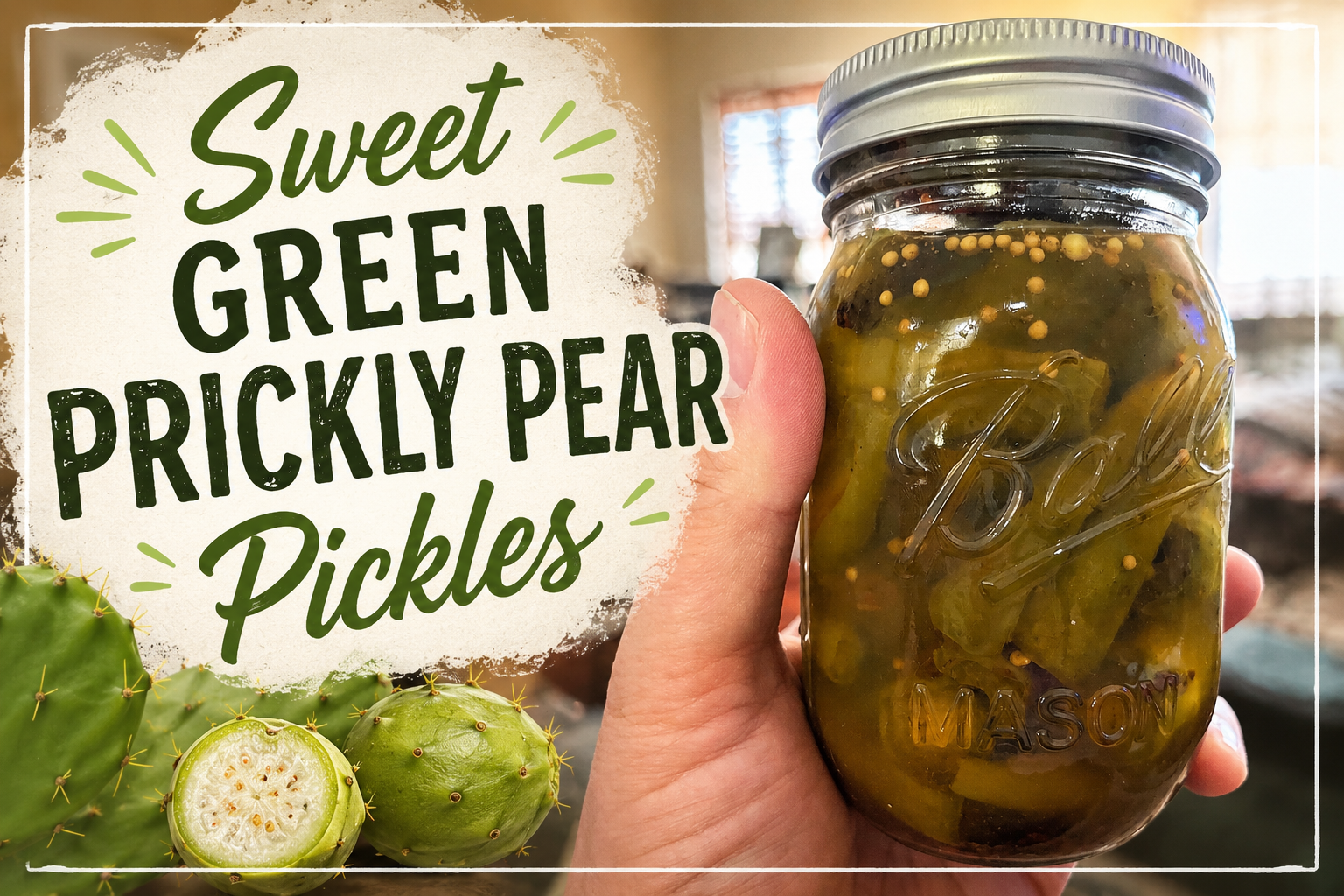
Sweet Green Prickly Pear Pickles
Sweet & Green Prickly Pear Pickles
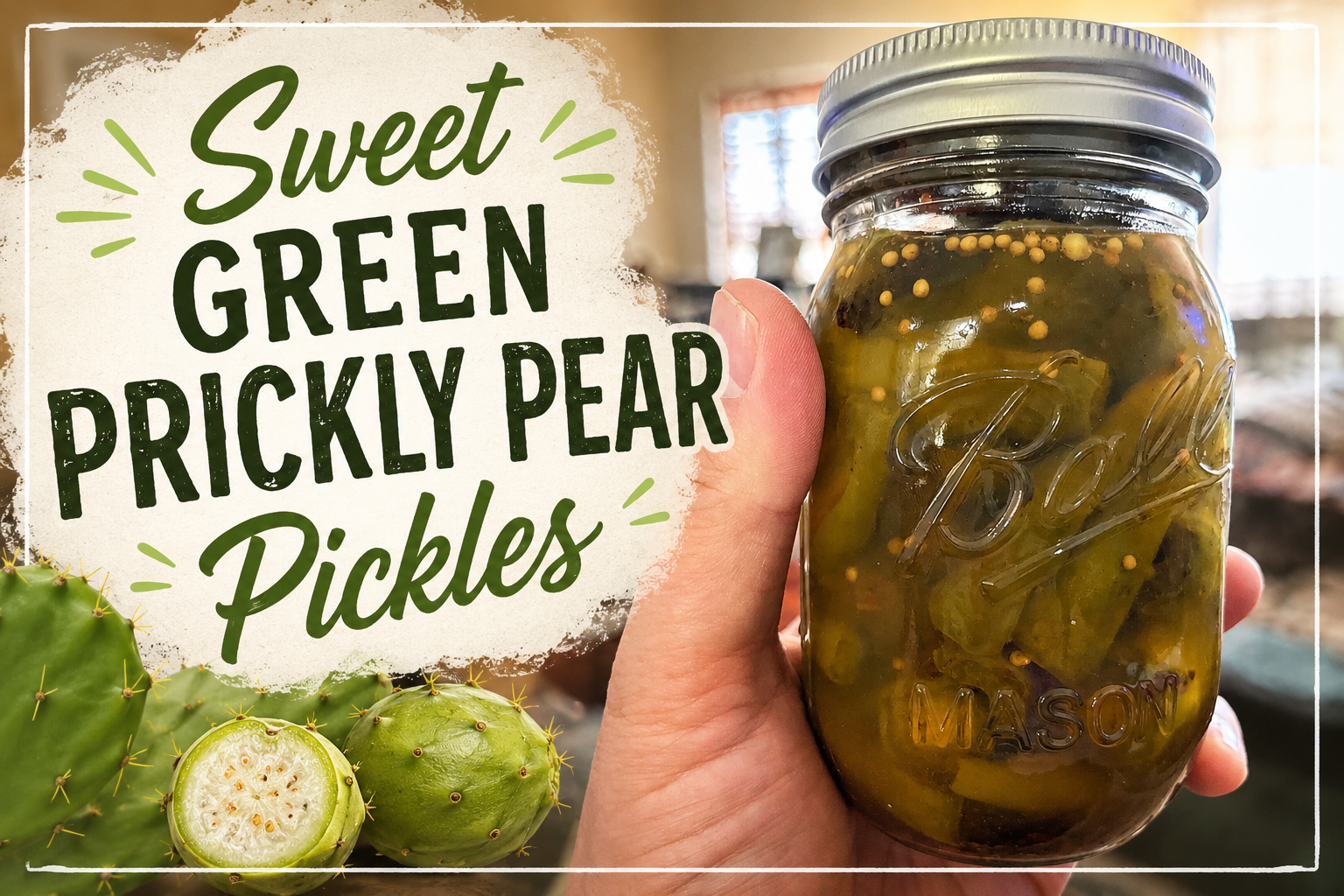
It all started when I was a child plucking grapes in the Napa Valley (just kidding). Please enjoy this recipe I have created for GREEN (unripe/just flowered) sweet prickly pear fruit pickles without scrolling through an abridged SEO memoir. Please reward me with a comment detailing your interpretations and improvements on this recipe.
Ingredients
1 cup apple cider vinegar
1 cup water
3/4 cup sugar
1 teaspoon (or less) of pickling salt + enough salt to cover the prickly pears to draw out the mucilage
1/2 teaspoon mustard seeds
1/4 teaspoon tumeric
1/8 teaspoon ground clove (or more)
1/4 teaspoon of cinnamon
Three long peppercorns
2 dried red Thai chilis
Green/underripe prickly pear fruit with spines removed (enough to fill a 300 mL mason jar).
When to Pick Green Prickly Pear Fruit
In early-to-mid June, prickly pear is in flower in Southern Colorado. Shortly after they flower is the time to pick the unripe fruit. At this time, the seeds are white with a caper-like texture.
How to De-spine Prickly Pear Fruits
I made a video removing the spines of the prickly pear fruit so you don’t have to picture in your mind what I wrote below.
Knock off any spent/dried flower bud of the prickly pear fruit. Using tongs and a knife, cut the fruit at the base and put into a bowl. When you have harvested the fruits, using tongs, cut the top of the fruit off if you are dealing with Opuntia phaeacantha or any hybrid/taxonomic rage-bait plant with fruits which are barrel-shaped with an apex that is concave (like I had found).
Still holding with tongs, run the sharp blade of your knife back and forth across the surface of the fruit to remove the glochid clusters on the areoles. With tongs, run the fruit under your faucet to wash any residual glochids off. After inspecting the fruit for remaining glochid clusters, you are now safe to handle the fruit with your hands. If you want to remove as much slime as possible, you should slice the prickly pear fruits lengthwise now. Otherwise, you can leave them be.
How to De-Slime Prickly Pears
Drop the prickly pears in a high salinity water bath (over 15%), and leave them alone for 10-30 minutes. Alternatively, you can coat them with a generous amount of pickling salt and massage it in. The salt will draw out the mucilage. After letting sit, you can rinse the fruit in a colander in your sink until most of the mucilage is washed off. If dissatisfied, you can repeat this process… just make sure to taste them and make sure you have washed off enough salt to your taste.
Sweet Green Prickly Pear Pickles: The Procedure
If canning, sanitize your mason jar and lid in boiling water.
In a saucepan, add the vinegar, water and sugar and bring to a light boil until the sugar is completely dissolved.
Place your spices, peppers, and peppercorns into the mason jar. Pack your processed fruits into the hot/sanitized jar and pour your hot vinegar liquor over them leaving a half-inch of headspace.
If you are doing refrigerator pickles, you can close the jar and place it into the refrigerator.
If you are canning, you can seal the jar in a boiling water bath for 10-15 minutes depending on USDA recommendations for your altitude.
SEO Bloviations and Musings on My Recipe
My genus of Opuntia is likely some Frankenstein hybrid between O. phaeacantha and… only God knows what (taxonomists scream at each other behind closed doors about this). That said, the ripe red fruits are barrel shaped with a concave flower scar. They have a very meager pulp-to-seed ratio when ripe so— to make jelly—you need a metric “buttload” of this fruit (for this fruit morphology) to make jelly.
To make matters worse, the pulp itself has a disagreeable vegetal “musk” to it which I have used ginger to mask. So… I thought that the under-ripe cactus fruit itself might make a great pickle. The seeds—shortly after fertilization—are white, soft, and pop like capers. When mature, the seeds are as hard as a mouth load of ball-bearings. They hurt!
Anyhow, I believe this is the only published utilization of the under-ripe fruit of the prickly pear cactus. Welcome to this intrepid precipice of culinary discovery for which humanity will…. oh LOOK!
A SQUIRREL!!!