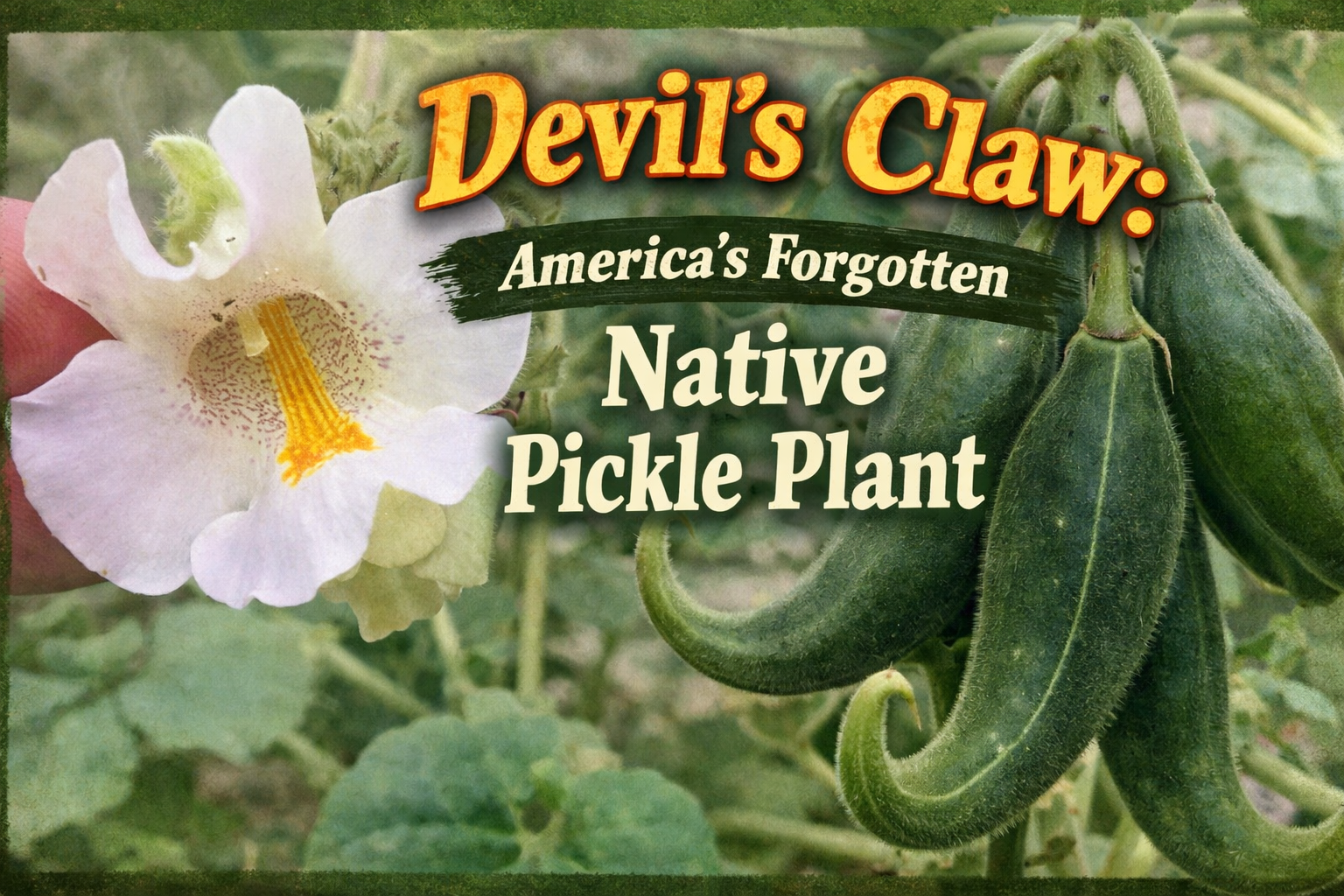
Devil's Claw: America's Forgotten Native Pickle Plant
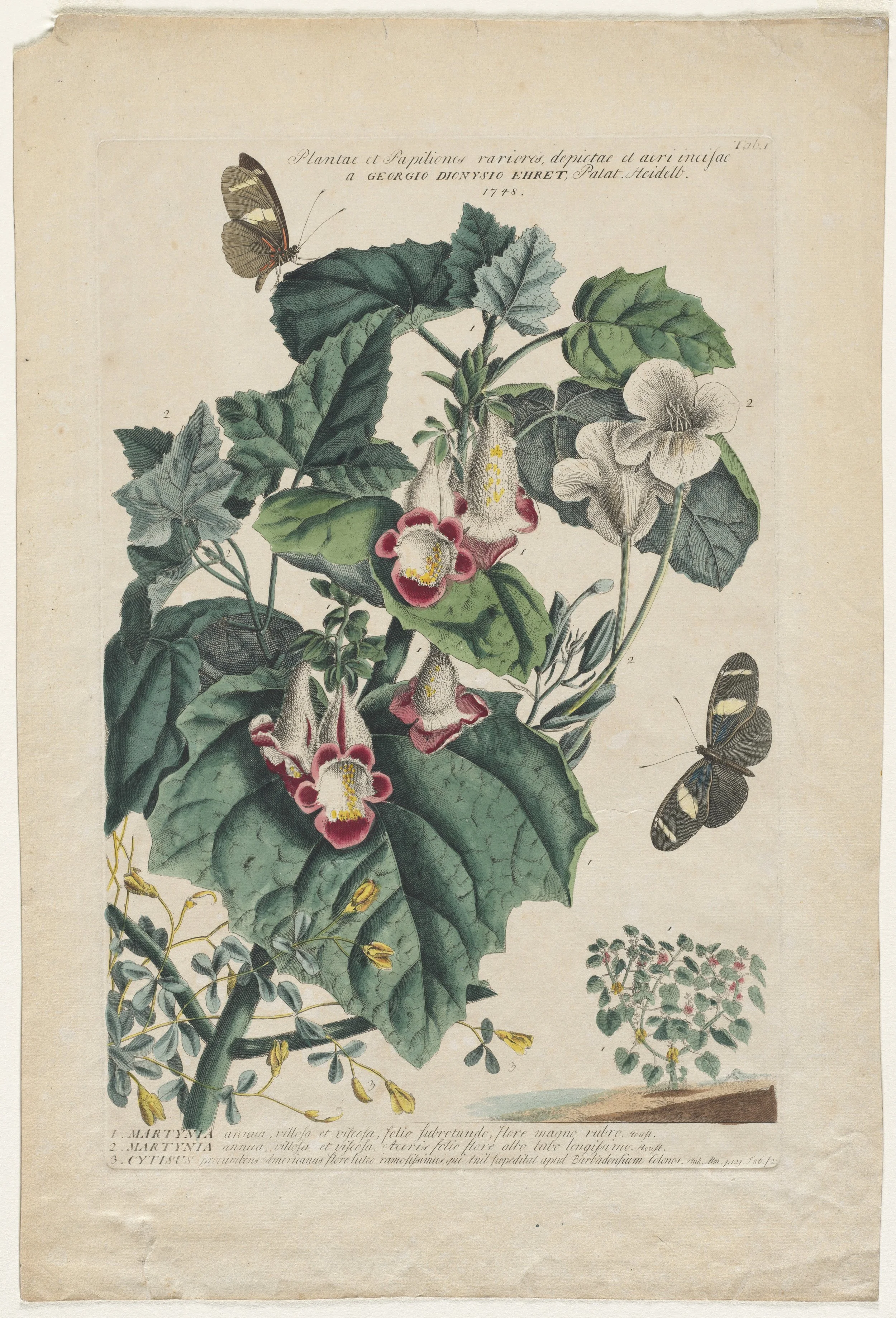
The first known illustration of Proboscidea spp, then known by the outdated synonym: Martynia spp.
Ehret, G. D. (1748). Martynia [Hand-colored engraving]. In Plantae et papiliones rariores. Internet Archive. https://archive.org/details/[item-identifier]
Proboscidea louisianica (Mill.) Thell
Family — Martyniaceae Horan.
Family Characteristics — Hairy and malodorous, Martyniaceae family members tend to be pubescent (covered in fine hairs) that may-or may-not secrete a sticky liquid. Charming, right? Inflorescences are racemose (clustered and evenly spaced on a dedicated stem). The flowers are perfect (containing both sexes) with didynamous stamen (four stamen: two long and two short) [1].
Outdated Synonym— Martynia louisianica.
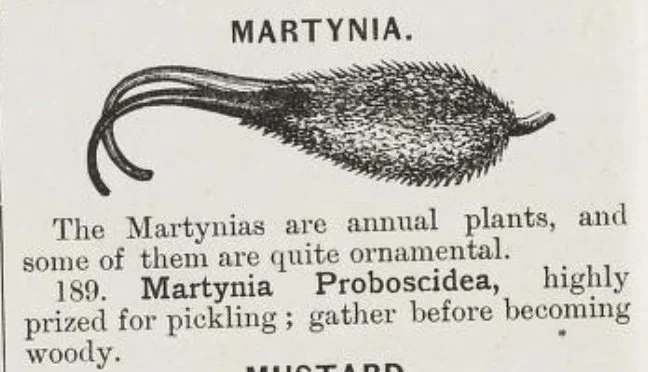
W. R. Strong & Co. (1884). Catalogue. Lewis & Johnston.
Binomial Etymology — Probosci- from GREEK Proboskis/προβοσκίς (meaning: elephant trunk). -idea is from the GREEK eidos/εἶδος (meaning: “form”). So the genus name tells us “in the form of an elephant trunk,” which doubtlessly refers to their fruits which feature a striking trunk-like protuberance [2].
Binomial Pronunciation: —Pro-bos-ki-DEE-ah
Colloquial/Poetic Names— Cow Catcher, devil’s Claw, Elephant-Tusk, Martynias, Martineos, Proboscis Flower, Ram’s Horn
USDA Native Status — Native to the Americas.
Description
Broadly ovate lobed leaves. The entire plant is covered in glandular hairs that make it slightly sticky and clammy. Flowers are relatively large and showy with four fertile stamen (two long/two short) and one infertile staminode (a Martynacae family characteristic) [7].
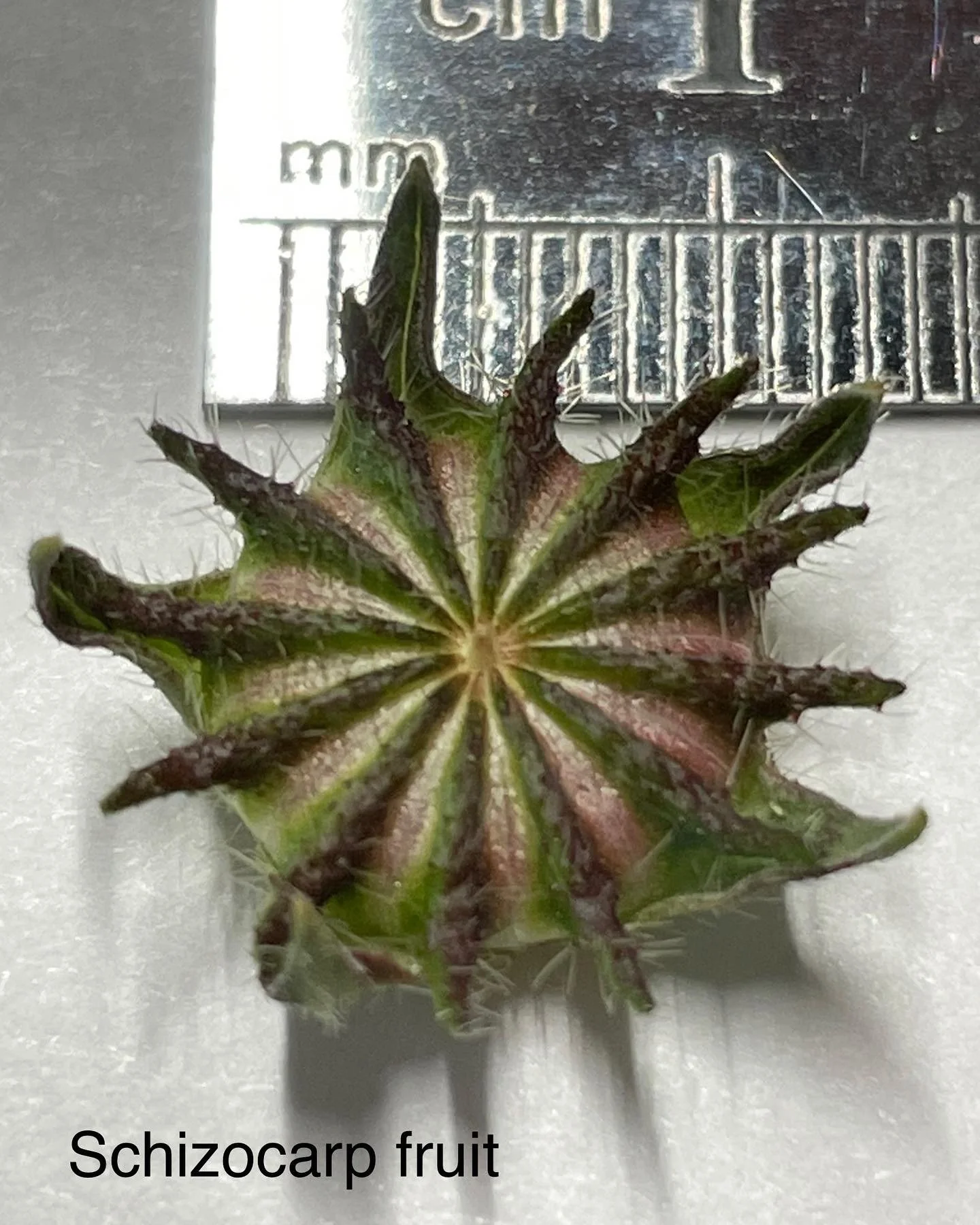
The developing fruit resembles a green elephant head with an upturned trunk or a fuzzy-green elf shoe. With age the fruit will split, resembling a woody/black elephant skull with two tusks bearing sharp hooks on the ends.
Habitat
Often solidary [7] in farmland, pastures, and disturbed areas.
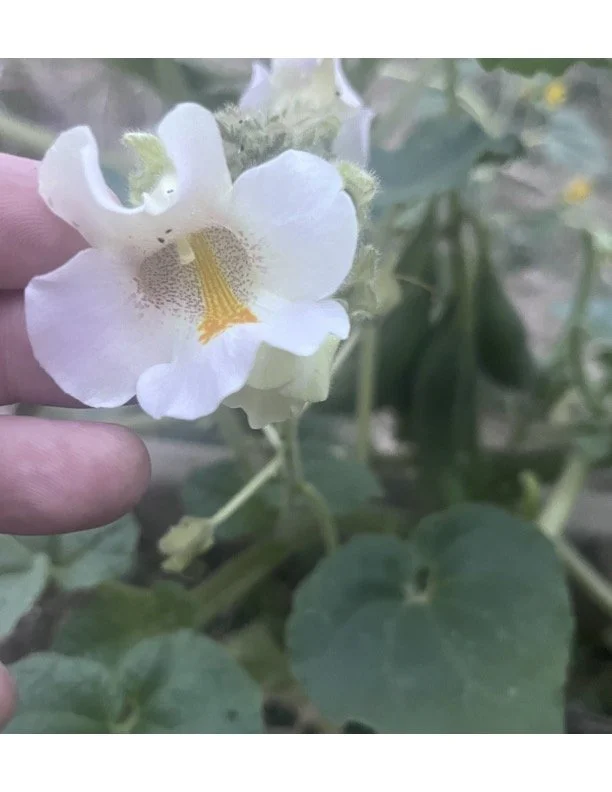
Proboscidea lousisianica growing in my yard.
Martinias Were once “Relished”
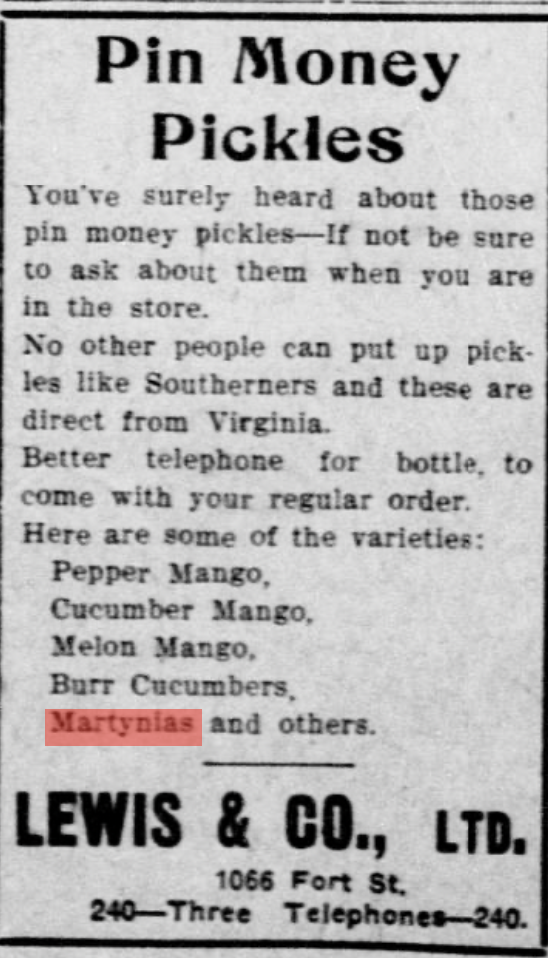
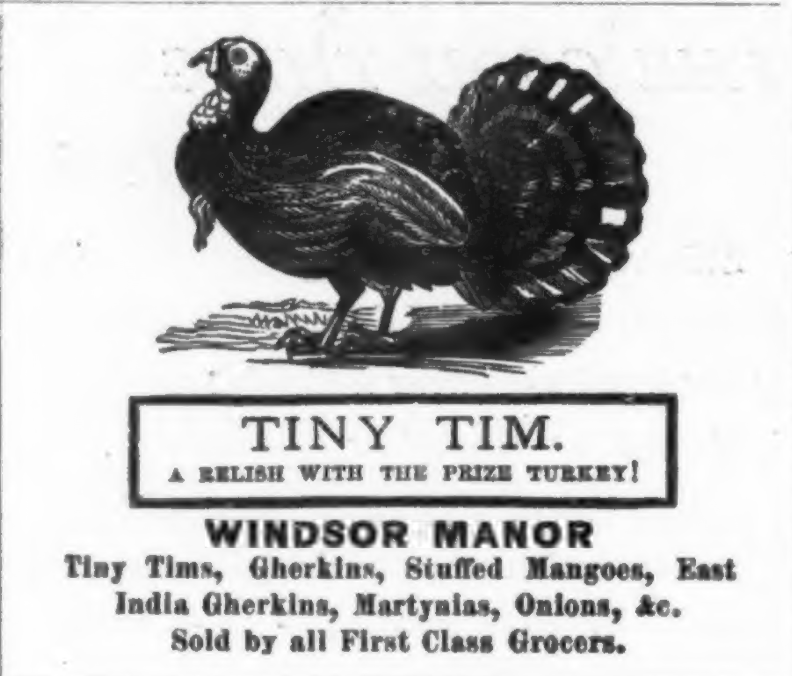
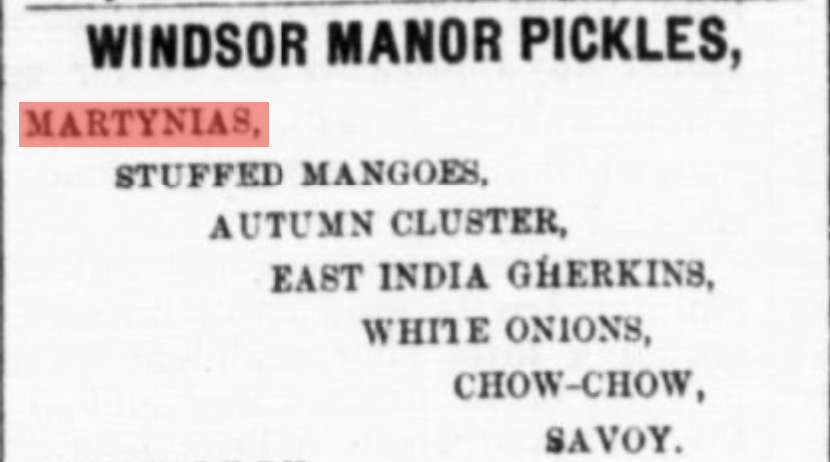
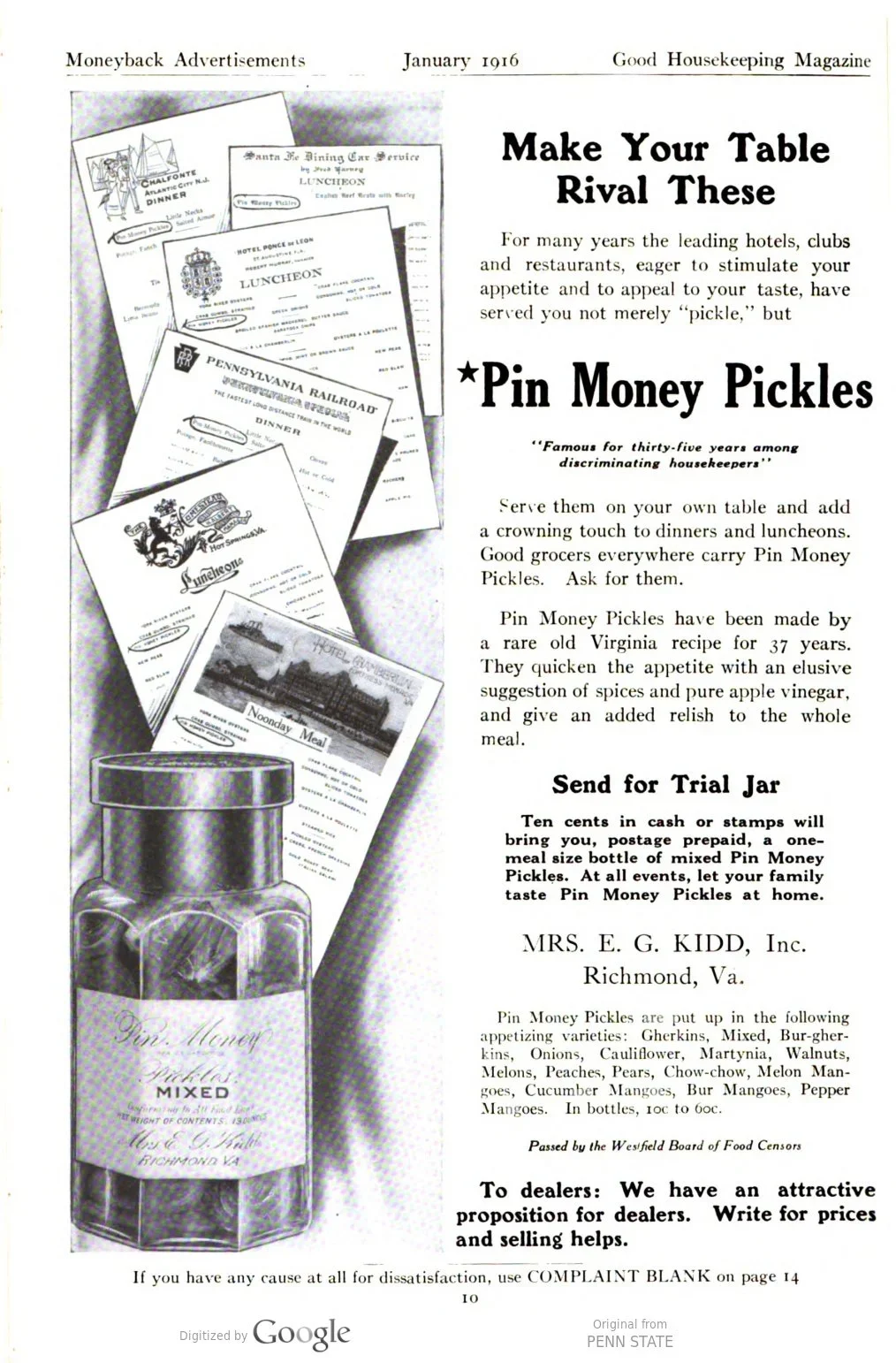
For over a hundred years, from the early 1800s to the early 1900s, Martynias were considered one of America’s gourmet pickling fruits. While often mentioned as “common” pickling vegetables in their day, they were also mentioned in the same breath as “spiced cantaloupe slices” and “celery stuffed with Roquefort” — items doubtlessly served in restaurants with one dutiful French waiter hiding behind every fern [4].
As early as 1896, The Evening Bulletin (Maysville, Ky.), August 30, noted that Martynias were a “rare thing nowadays…an old fashioned and aristocratic pickle… very few old Virginia and Kentucky families were without them.” However, it seemed that old money children may not have been too fond of them, as they were known among the youth as “drowned mice.” Let’s take a moment to appreciate how hilarious that actually is [11].

Graph created by the author using search results for “martynias” from Chronicling America: Historic American Newspapers, Library of Congress (https://www.loc.gov/collections/chronicling-america/).
A widely used handbook from 1918, Successful Canning and Preserving by Ola Powell Malcolm, mentions martinias in a list of the most common pickling vegetables of the time. Interestingly, of these vegetables, only one contained a footnote explaining what it was: chayote (“a comparatively new vegetable”[3]).
“Among the most common vegetables which are pickled are cucumbers, tomatoes, beets, onions, carrots, martynias, artichokes, cabbage, and chayotes.”
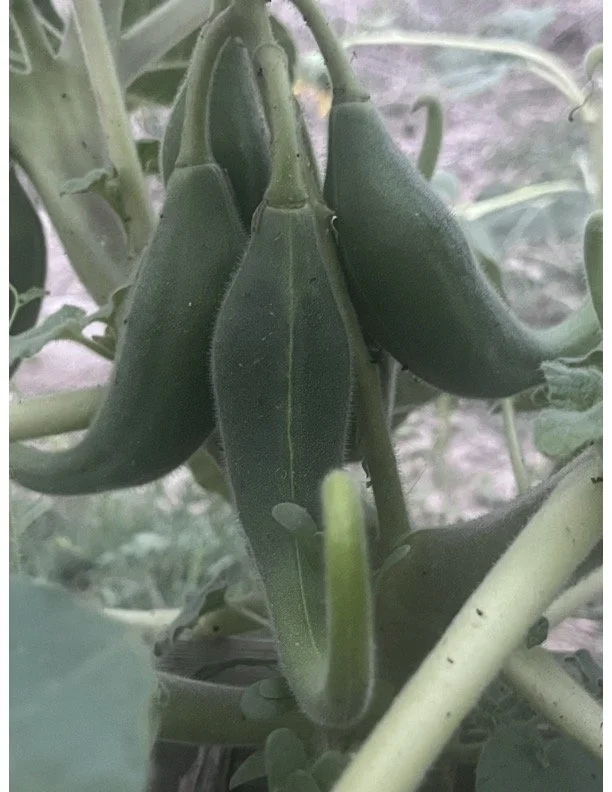
Proboscidea louisianica fruits growing in my yard.
The Lost culinary Marvel: sweet martinias
““There can be no finer pickle than this...””

Cornelius, M. H. (1859). The young housekeeper’s friend. Stereotyped by Crocker and Brewster.
““There are comparatively few persons who have eaten good pickles unless they have tasted of martynias.””
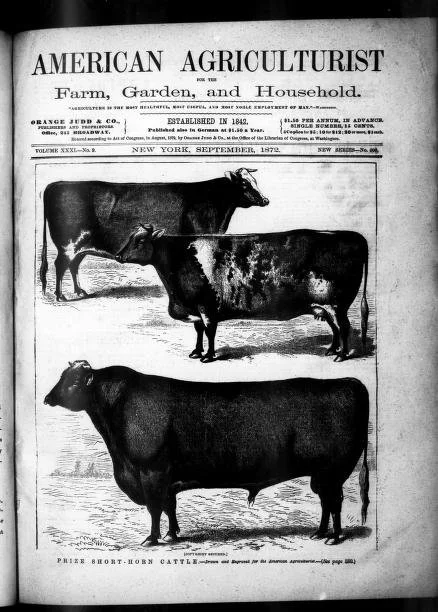
American Agriculturist. (1872, September). American Agriculturist, 31(9). Farm Progress Companies.
Sweet Martinia PICKLE Recipe
This recipe is derived from the USDA bulletins placed in newspapers circa 1924, and uses the method of “salt-curing.” The high percentage of salt used in this method helps to prevent fermentation. Keeping the martinias in this high salinity brine draws out moisture, and allows one to continuously harvest and add to the vessel without the risk of spoilage [9]. Salt curing is supposedly good for martinias, as it has the added benefit of firming the flesh of the fruit. I have created a recipe combining the early 20th century USDA curing method, and other contemporary recipes that deal with the spiced vinegar syrup.
I have also updated the final preservation methods to include practices in keeping with modern standards of food safety in water bath canning.
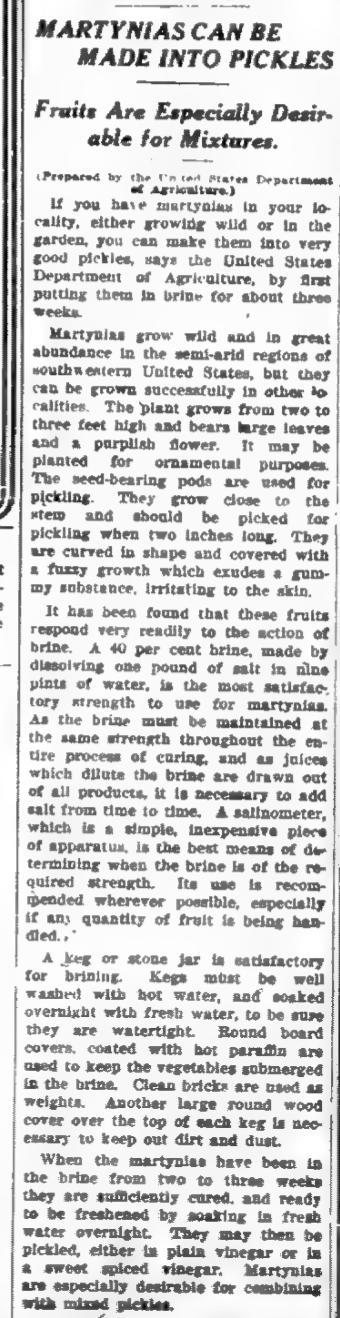
The Powell Valley News Pennington Gap, Lee County, Virginia, U.S.A. Vol. 3, No. 46: Friday, January 4, 1924
Materials:
Stoneware crock with weights or alternative fermentation vessel
Mason Jars
Canning Lids
Salometer (OR a fresh egg if you want to do this traditionally)
pH strips (optional)
Fermentation Ingredients:
1 pound (454 g) salt
9 pints water (18 cups / approx. 4 liters)
(additional salt to maintain salinity over time)
devil’s claw pods
Pickling Vinegar (for final preservation):
1 gallon vinegar (apple cider vinegar or white vinegar)
3 pounds brown sugar
1 handful—more-or less—horseradish (grated).
1/2 cup allspice (whole)
1/2 cup black peppercorns
Dried red pepper pods (according to heat tolerance)
3 tbsp cloves
Other spices from historic variations:
Black mustard seed
Cinnamon sticks or ground cinnamon
Ginger
Whole mace
Nutmeg
STEP ONE (SALT CURING):
Dissolve 1 lb (484 g) of salt in 9 US pints (4.3 liters or kgs) of water. Then, in a clean stoneware crock, submerge the pods in this brine solution with a sanitized weight and leave for 2-3 weeks. The brine will draw water from the pods, decreasing salinity, so add salt as needed. Nerds, if you have a salinometer (like I do), then your target is 40° Sal (a 10.6% solution of salt per water weight). If you want to be historically accurate, you can use a fresh egg as a folk-hydrometer. When placed in the brine, the egg should float so that at least coin sized portion of it is peaking above the water.
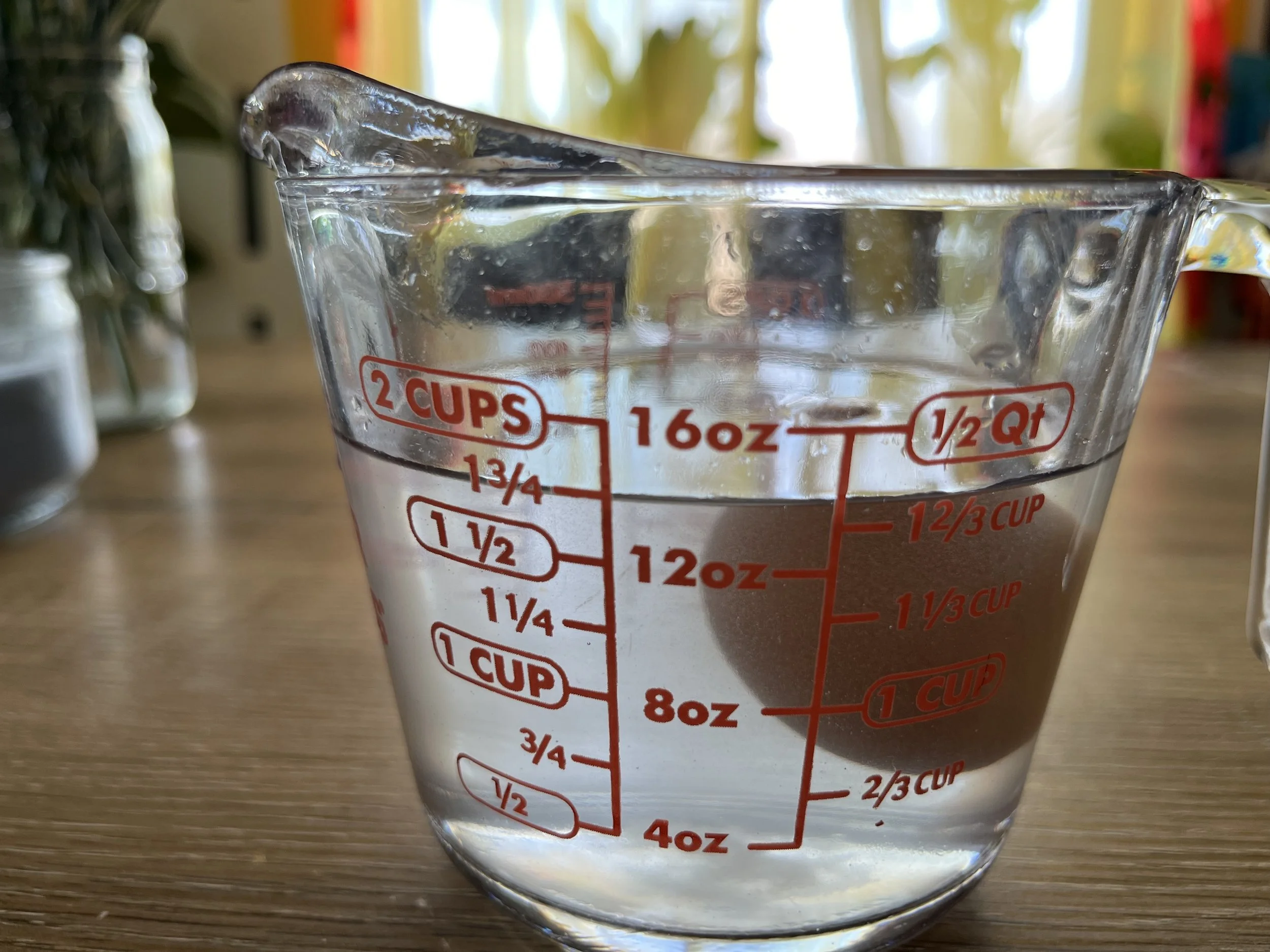
A fresh egg floating in an approximately 10% salt solution by mass (40g salt in 400ml water).
STEP TWO (WATER SOAK):
Soak the martynias in fresh water overnight to draw out excess salt (some recipes soak the martynias in vinegar or a mixture of vinegar and water). If undecided, consult your bag of enchanted bones.
STEP THREE (SWEET PICKLING VINEGAR):
Boil together vinegar and spices. While boiling, drain the soaking pods, and pat them dry. Put the martinias in sanitized canning jars. Pour the hot vinegar liquor over the martinias, and can them in a boiling water bath according to modern academic recommendations for your elevation. Most 19th and early 20th century sources stress the importance of letting the flavors marry at least one month. Aging for six months was considered the ideal aging time.
Historically, the Martynias were left to age in a crock with sanitized weights holding them down. Some sources recommended reboiling the vinegar liquor and re-adding it to the Martynias from time to time.
Note: To safely prevent a terrifying life-or-death battle with botulism, your vinegar syrup must have a pH of 4.6 or below to safely do a water bath canning [10]. Seeing as your brine is essentially vinegar, you are likely WELL below that threshold. If in doubt, dip a little pH strip in there.
For more instructions on water-bath canning: https://www.canr.msu.edu/resources/basics_of_water_bath_canning
Water-bath canning times in relation to altitude: https://www.ballmasonjars.com/adjust-high-altitude-canning.html
Thanks for reading to the end. ONE OF THE BELOW BUTTONS WILL TAKE YOU TO FURTHER READING ON THE DEVIL’S CLAW, AND THE OTHER WILL TAKE YOU TO MY PATREON PAGE SO YOU CAN HELP SUPPORT MY WORK. CHOOSE… WISELY.
With love,
Kevin
Other Sources of Martynia Pickle Recipes
Wilcox, E. Woods. (1890). The new practical housekeeping: A compilation of new, choice and carefully tested recipes. Subscription ed. Minneapolis, Minn.: Home publishing company.
Good Housekeeping. (1890, September 13). Good Housekeeping, 11(10). Hearst Magazines.
Pechin, M. Shelley. (1915). Cook book 365, no. 2. [Cleveland]: The Burrows bros. co..
Stieff, F. P. (Comp.). (1932). Eat, drink & be merry in Maryland: An anthology from a great tradition. G. P. Putnam's Sons.
Ethnobotany
References
[1] Thieret, J. W. (1977). The Martyniaceae in the southeastern United States. Journal of the Arnold Arboretum, 58, 25–39. https://doi.org/biostor-62007
[2] Coombes, A. J. (1993). Dictionary of plant names. Timber Press.
[3] Powell, O. (1918). Successful canning and preserving: Practical handbook for schools, clubs, and home use (R. E. Gamble, Illus.). J. B. Lippincott Company.
[4] Harris, F. L. (1939). Flavor's the thing. M. Barrows and Company.
[5] Farm Progress Companies. (1872, September). American Agriculturist, 31(9). Internet Archive. https://archive.org/details/pub_american-agriculturist_1872-09
[6] My Fermented Foods. (n.d.). Brine calculator. https://myfermentedfoods.com/tools/brine-calculator/
[7] Southern Progress Corporation. (1924, November 29). The Progressive Farmer (Vol. 39, Iss. 48).
[8] Weber, W. A., & Wittmann, R. C. (1996). Colorado flora: Eastern slope (2nd ed.). University Press of Colorado.
[9] Etchells, J. L., & Jones, I. D. (1944). Brine preservation of vegetables. U.S. Department of Agriculture, Agricultural Research Administration, Bureau of Agricultural and Industrial Chemistry.
https://www.ars.usda.gov/ARSUserFiles/60701000/Pickle%20Pubs/p22.pdf
[10] National Center for Home Food Preservation. (n.d.). Ensuring safe canned foods. University of Georgia, Cooperative Extension.
https://nchfp.uga.edu/how/can/general-information/ensuring-safe-canned-foods/
[11] The evening bulletin (Maysville, Ky.), August 30, 1898